RecoveryEnglish
Sports massage in Cannes: who it is for, when, and what the research shows about recovery
Sports massage can reduce soreness and perceived fatigue in the days after exercise. It does not heal an injury, does not improve a time, and the right moment counts as much as the pressure.
This article is informative and concerns a wellness practice. It does not replace medical advice, a diagnosis or treatment.
You run along the seafront between Palm Beach and La Bocca, you climb the Col du Tanneron by bike on Sunday mornings, you swim at the pool or you are preparing for the Nice-Cannes marathon in November, and for a few weeks your legs have been telling you they have not finished recovering when the next session starts. Someone has recommended a sports massage. Before booking, you want to know whether it does anything, how it compares with foam rollers, cryotherapy or rest, and whether it will hurt. I have practised sports massage in Cannes for several years, and I am going to give you both sides, what is proven and what is not.
What a sports massage is, and what it is not
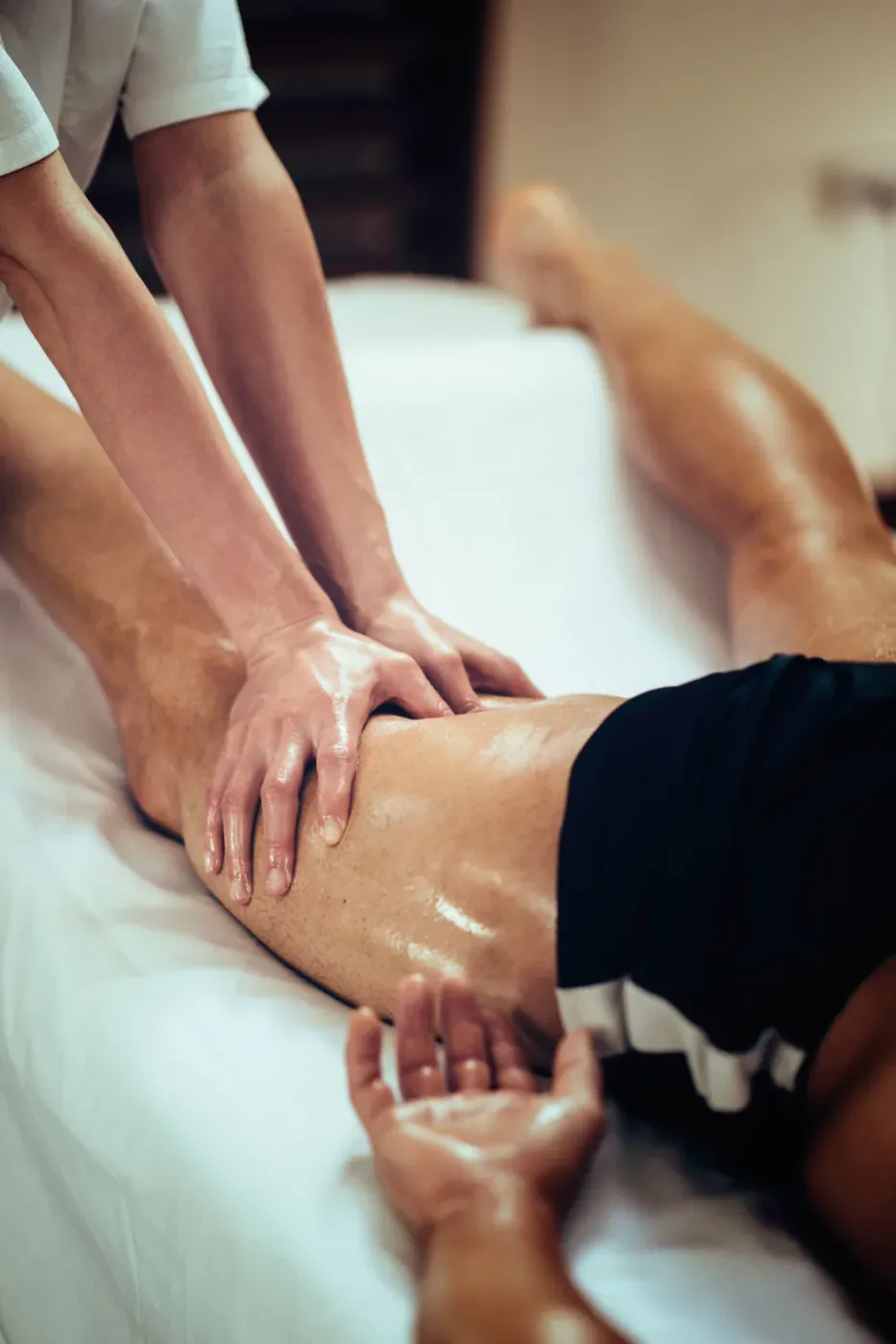
Sports massage is deep muscular work, aimed at the groups your sport uses: calves, hamstrings, quadriceps and glutes for running and cycling; shoulders, back and arms for swimming, tennis, golf; more or less everything for combat sports and CrossFit. It combines slow, deep pressure, cross-fibre friction on tight areas, passive stretches that I carry out during the session, and, when useful, tools: wooden sticks for precise points, cupping to release an area that is sticking, bamboo for long stretches of muscle. In its intensity, it is close to Thai massage for the stretching part, and to deep tissue for the pressure part.
What it is not: treatment. I practise wellness massage, and in France the line has been clear since the law of 26 January 2016 and the ruling of the Cour de cassation of 29 June 2021, explained by the Fédération française de massages bien-être: only massage whose purpose is to prevent the deterioration of functional capacity is an act of physiotherapy. A sprain, a tear, an established tendinitis, a pain that has lasted three weeks, is your doctor or your physiotherapist. I do not treat injuries; I work on a healthy body that needs to recover, to relax or to prepare.
What the research shows
On soreness and fatigue, the data are fairly favourable, and more solid than for most recovery techniques.
In 2018, a team from the University of Poitiers published in Frontiers in Physiology a systematic review with meta-analysis comparing post-exercise recovery methods: massage, compression garments, cold-water immersion, hot-cold contrast, cryotherapy, active recovery, stretching. Their conclusion, which you can read in the article by Dupuy and colleagues, is that massage is the most effective technique for reducing soreness and perceived fatigue, with a moderate drop in creatine kinase, a marker of muscle damage, and a smaller drop in inflammatory markers such as interleukin-6 and C-reactive protein.
In 2017, another meta-analysis, by Guo and colleagues, pooled eleven randomised trials and 504 participants: soreness decreases after massage at 24, 48 and 72 hours, with the strongest effect at 48 hours, and creatine kinase also drops, especially at 48 and 72 hours.
Now the limits, because they count just as much. The authors of both analyses say so themselves: the studies are small, it is impossible to massage someone without them knowing, so the placebo effect cannot be isolated, and the methodological quality of the included trials is judged to be low. These analyses look at a single session, not months of follow-up. And above all, none of this work shows that massage improves performance or prevents injury. If someone sells it to you that way, they are going beyond the evidence. What you can reasonably expect is to hurt less and feel less heavy in the two or three days after intense effort.
An older synthesis, by Moyer, Rounds and Hannum (2004), brings together massage trials in a broader setting than sport. It does not allow a wellness session to be turned into treatment either, nor any conclusion about times. Above all it reminds us that massage has been studied, with modest and mixed results, and that it cannot be turned into an advertising argument.
The right moment
After exercise, the best slot is between the next day and the day after. On the day itself, the muscle is in full inflammatory reaction and deep pressure brings nothing good; a light lymphatic drainage or venous return session, yes, deep work, no. At 24 or 48 hours, that is when the data show the most effect on soreness.
Before a competition, the logic reverses. A deep massage in the 48 hours before a race leaves the muscle a little “empty”, with less tone, and some athletes feel flat on the day. If you want a session before an event, take it five to seven days before, or ask me for a short, light session the day before, with no depth. Never try a deep massage for the first time in the week of a competition.
For maintenance, between two training blocks, one session every two to four weeks is a reasonable rhythm for most serious amateurs. You do not need to come every week; if someone recommends that without a precise reason, ask them what it is.
Does it hurt
Yes, at moments, and no, it should never be unbearable. A sports massage works in a zone where the pressure is clear, where you feel the muscle give under the thumb or the elbow, and where you may want to grit your teeth on a precise point. The rule I give you from the start: if you are holding your breath, it is too much, and you tell me. I would rather do ten passes at a pressure you can tolerate than one heroic pass that makes you tense your whole body to defend yourself. Slight soreness the day after a first deep session is normal; a bruise is not, and if you have one, I reduce the pressure next time.
The first session is also there to learn your threshold. Two people from the same club, on the same Sunday, do not tolerate the same depth. It is not a competition. Nor is it a measure of the “quality” of the massage.
Who it is not for
A recent injury, a sprain, a muscle tear, acute inflammation, a pain that makes you limp: no deep massage, straight to the doctor. Thrombosis, phlebitis, or anticoagulant treatment: no deep pressure on the legs. Fever or an ongoing infection. Pregnancy, where I change my approach completely. Known bone fragility. And one less obvious case: deep nervous fatigue, overtraining with disrupted sleep, where a deep session adds load instead of removing it; there, I offer you something else, slower, and you come back to deep work later.
The local calendar
The Marathon des Alpes-Maritimes Nice-Cannes, whose 2026 edition takes place on Sunday 8 November according to the City of Cannes, fills my diary for the ten days that follow. If you are running it, book your recovery session for the following Tuesday or Wednesday now, not for Sunday evening. The Nice Ironman in June, the Estérel sportives, the Tanneron and Sainte-Baume trails have the same effect on a smaller scale.
The detail of the timing before and after that race, what to avoid in race week, what is pointless on the day, and why Tuesday beats Sunday evening, is covered in the article on the Nice-Cannes marathon.
How the session goes
An hour and a half, at the studio in Cannes or at your home, with my table, if you would rather not drive afterwards. We talk about your sport, your week, what is pulling, what is old, what is new. I work the relevant areas at a pressure we adjust together, I bring in stretches when the muscle allows, and I use tools only if an area demands it. You leave with lighter legs, an urge to sleep, and two instructions: drink, and do nothing intense before the next day.
The tools are not a separate menu. Cupping, bamboo, sticks have no price of their own. They come in only if an area calls for them, after the hands have worked. If you prefer hands only, the session is done without them, and nothing is lost.
The foam roller, percussion guns and a good night’s sleep remain useful. They do not do the same job: a tool does not read a calf that is defending itself, nor a hamstring that has changed since last week. The data say that massage does better on soreness and perceived fatigue than most of the alternatives tested. They do not say it is indispensable. It is up to you to decide what you expect from your legs next Tuesday.
Sources
- An Evidence-Based Approach for Choosing Post-exercise Recovery Techniques to Reduce Markers of Muscle Damage, Soreness, Fatigue, and Inflammation: A Systematic Review With Meta-Analysis — Frontiers in Physiology, 2018 · consulted on 2026-09-14 (opens in a new tab)
- Massage Alleviates Delayed Onset Muscle Soreness after Strenuous Exercise: A Systematic Review and Meta-Analysis — Frontiers in Physiology, 2017 · consulted on 2026-09-14 (opens in a new tab)
- Cour de cassation : l'usage du terme massage n'est pas réservé aux kinés — FFMBE, 2021 · consulted on 2026-09-14 (opens in a new tab)
- Marathon des Alpes-Maritimes Nice-Cannes 2026 — Ville de Cannes, 2026 · consulted on 2026-09-14 (opens in a new tab)
- A meta-analysis of massage therapy research — Psychological Bulletin / NCBI, 2004 · consulted on 2026-09-14 (opens in a new tab)
Frequently asked questions
Does sports massage in Cannes hurt?
At moments, yes: the pressure is clear, the muscle gives, a precise point can make you grit your teeth. It should never be unbearable. If you are holding your breath, it is too much: we reduce. Slight soreness the day after a first deep session is possible; a bruise is not.
When should I have a massage after sport?
The most useful slot is between the next day and the day after. On the day itself, the muscle is in inflammatory reaction: deep pressure brings nothing good. The meta-analyses place the strongest effect on soreness around 48 hours.
Can I have a massage the day before a competition?
A deep massage in the 48 hours before a race often leaves the muscle a little "empty". Better: five to seven days before, or a short, light session the day before, with no depth. Never try deep work for the first time in the week of an event.
Does sports massage heal an injury?
No. A sprain, a tear, an established tendinitis or a pain that has lasted three weeks belong to the doctor or the physiotherapist. I practise wellness massage on a healthy body that needs to recover, relax or prepare, not treatment.
What does the research say about soreness?
Two meta-analyses (Dupuy 2018, Guo 2017) conclude that massage reduces soreness and perceived fatigue better than most of the alternatives tested, with a peak around 48 hours. The trials are small, the placebo cannot be isolated, and nothing in them shows improved performance or injury prevention.
How long is a sports massage session in Cannes?
An hour and a half, in my private space in Cannes or at home with the table, if you would rather not drive afterwards. We talk about your sport, your week and what is pulling; the pressure is adjusted during the session.
Sports massage or drainage after intense effort?
On the day itself, a light drainage or venous return session may suit; deep work, no. At 24 or 48 hours, sports massage comes back into its own. The choice depends on the state of the muscle, not on a single protocol.
The author
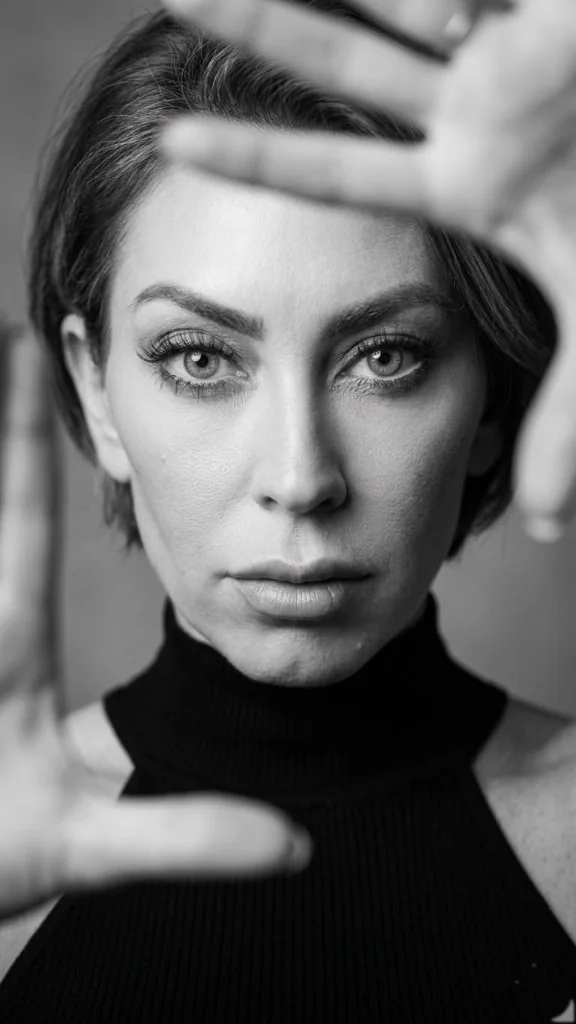
Massage therapist in Cannes, I have practised massage for around ten years, five of them professionally. Sports massage and lymphatic drainage are the foundation of my work: deep muscular work, with stretches and tools when useful, and a drainage I adapt to the person, slow and light or more rhythmic depending on what you are looking for. I receive clients in my private space in Cannes and I travel to homes, hotels and villas, from Cannes to Monaco and Saint-Tropez. Ashiatsu and my signature massage have their own site: michellediasprivat.com. Here I write what I tell my clients before a session: what each technique brings, what it does not do, and who it is not for, with the sources that trained me.
Continue to a session
The techniques described here are integrated into a session when they are relevant. They are not booked separately.