RecoveryEnglish
Nice-Cannes marathon: when to have a massage before and after, and what is pointless
Before the Nice-Cannes marathon on 8 November 2026, deep massage goes after your long runs, never in race week. Afterwards, Tuesday and Wednesday beat Sunday evening.
This article is informative and concerns a wellness practice. It does not replace medical advice, a diagnosis or treatment.
On Sunday 8 November 2026, you will set off from the Promenade des Anglais and arrive on the Croisette, forty-two kilometres later, according to the programme published by the City of Cannes. You have your training plan, your shoes, your fuelling strategy, and somewhere in your head a question you ask yourself on every long run: will a massage help me, and when? I have been massaging runners in Cannes for several years, and the marathon fills my diary every November. Here is what I tell them, with what the research confirms and what it does not.
This text does not replace the broader article on sports massage. It narrows it down to one date: Nice to Cannes, 8 November. The same studies, the same wellness framework, a tighter calendar.
During training: yes, but not just any time
The eight to ten weeks before the marathon are the ones where your mileage is highest, where you string together Sunday long runs and midweek threshold sessions, and where your calves and hamstrings never quite have time to recover. That is where a sports massage makes the most sense, at a rhythm of one session every two or three weeks, placed one or two days after your long run, never the day before a quality session.
In practice, if we are in mid-September, you are already in that window. A Sunday at 28 or 32 kilometres, a Tuesday session: that is the right pairing. It is not “one massage a week until 8 November”. That rhythm has no basis in the trials, and it tires more than it relieves.
The reasoning is simple: the meta-analysis by Dupuy and colleagues, published in 2018 in Frontiers in Physiology and available online, compared post-exercise recovery techniques and concludes that massage is the one that reduces soreness and perceived fatigue the most, ahead of compression, cold-water immersion and active recovery. Another meta-analysis, by Guo and colleagues in 2017, on eleven randomised trials, places the peak effect at 48 hours after exercise. If you run twenty-eight kilometres on Sunday, a massage on Tuesday lands at the right moment.
What these studies do not say: that massage improves your time, or prevents injury. The authors themselves point out that the trials are small, that the placebo effect cannot be ruled out since nobody can be unaware they are being massaged, and that the quality of the studies is low. So you can expect from a session that your legs will be less sore and less heavy in the following days, and nothing more. The rest is your plan, your sleep and your food.
Nice to Cannes is not a flat marathon on a plain. The start on the Promenade des Anglais, along the coast, then the finish on the Croisette: the profile changes in detail from one year to the next, but the picture stays the same for the legs I see afterwards. The calves and quadriceps pay for the tarmac and the end-of-race pace. That is not a reason to multiply deep sessions. It is a reason to place them after the long runs, not the day before a threshold session.
What I ask you, concretely, when you book: the distance of your last run, what has been pulling for more than two weeks, and whether there is a pain that makes you change your footing. Diffuse discomfort after 25 kilometres is not the same as a precise point on the tendon. The second is not for the table.
Marathon week: the deep massage trap
This is the most common mistake, and I see it every year: a runner who has never been massaged books a deep session on the Thursday or Friday before the race, “to be fresh”. He turns up on Sunday with soft legs, sometimes residual soreness, and a body that has not had time to absorb what was done to it.
A deep sports massage places a demand on the muscle, and the muscle needs two to three days to digest it. In the week before, that demand no longer has a place. The last deep session should be at least six or seven days before the start, so at the latest Saturday 31 October or Sunday 1 November for this edition. If you want something the day before or two days before, ask for a short, light session, aimed at circulation and release, with no pressure, no forced stretching. It will relax you, it will not empty you.
And if you have never been massaged, do not start in marathon month. You do not know how your body reacts, and this is not the time to learn. September and October exist for that.
A concrete calendar for the 8 November 2026 edition
A guide, not a medical protocol. If your training plan says otherwise, your plan wins.
Mid-September to end of October: one deep session every two or three weeks, one or two days after the long run. Learn your pressure threshold now, not in November.
Saturday 31 October or Sunday 1 November: last reasonable window for deep work. After that date, we lower the intensity.
Monday 2 to Saturday 7 November: no deep massage. If you absolutely want a session, short, light, circulation and release, no forced stretching.
Sunday 8 November: almost nothing. Walk, drink, eat, change, sleep. An express at the finish village, if you feel like it, is not the recovery session.
Monday 9 November: rest, gentle walking, compression if you are used to it. No deep pressure.
Tuesday 10 and Wednesday 11 November: the useful window. That is when I suggest you book.
Race day
Nothing. Or almost. Some finish villages offer ten-minute express massages; they feel good in the moment, they have no documented effect beyond that, and they do not replace what you will do in the following days. The most useful thing on the day is to walk ten minutes after the line, drink, eat, change quickly because it may be twelve degrees on the Croisette in November, and sleep.
Do not look for a slot on Sunday evening “to flush out the toxins”. That vocabulary has no place here. On Sunday evening, the muscle does not need sculpting. It needs warmth, fluid, sleep.
After the race: Tuesday, not Sunday evening
On Sunday evening and Monday, your muscles are in full reaction: micro-tears, inflammation, oedema. Deep pressure at that point speeds nothing up and can make the pain worse. What you can do on Monday is a very gentle session, drainage or venous return style, if you feel like it; it is not necessary.
From Tuesday, and especially Wednesday, sports massage comes back into its own: that is the 48 to 72 hour window where the two meta-analyses cited measure the clearest drop in soreness and creatine kinase, a marker of muscle damage. The session will be slower than usual, with progressive pressure, a lot of work on the calves, quadriceps and glutes, and passive stretches only if the muscle accepts them. You will leave tired, and that is normal.
If you have a localised, precise pain that makes you limp, that started during the race or just after, that is not for me: it is a medical consultation, because a stress fracture, a tear or a tendinitis are not massaged. I practise wellness massage; in France, since the law of 26 January 2016 and the ruling of the Cour de cassation of 29 June 2021, explained by the FFMBE, only massage for therapeutic purposes belongs to physiotherapists, and an injury belongs to them.
What also works, and costs nothing
In the same 2018 meta-analysis, active recovery, meaning walking or pedalling very gently the next day, and compression garments have more modest effects than massage, but real ones. Cold-water immersion also reduces perceived pain. Sleep remains the most effective factor and the least sold. If you can only do one thing the following week, sleep.
On Monday, ten to twenty minutes of walking on the flat, with no watch, are worth more than an hour of aggressive stretching. Marathon calves do not like being forced to lengthen too soon. If you come on Tuesday, I only stretch what the muscle accepts that day.
Booking
The marathon falls on a Sunday, and the slots on Tuesday 10 and Wednesday 11 November go first, every year, one to two weeks ahead. If you already know you want a recovery session, book it now, at the studio in Cannes or at your place if you are staying nearby for the race; I travel with the table, which saves you getting back in the car with marathon legs. An hour and a half, pressure adjusted together, and two instructions on the way out: drink, and run nothing before Thursday.
When you write, one sentence is enough: “marathon, Tuesday 10 or Wednesday 11, studio or hotel”. If a precise pain appeared during the race, say so before coming: we cancel rather than massage what should not be massaged.
Enjoy the last weeks of training. The final kilometre on the Croisette is worth it.
Sources
- Marathon des Alpes-Maritimes Nice-Cannes, Sunday 8 November 2026 — Ville de Cannes, 2026 · consulted on 2026-09-14 (opens in a new tab)
- An Evidence-Based Approach for Choosing Post-exercise Recovery Techniques to Reduce Markers of Muscle Damage, Soreness, Fatigue, and Inflammation: A Systematic Review With Meta-Analysis — Frontiers in Physiology, 2018 · consulted on 2026-09-14 (opens in a new tab)
- Massage Alleviates Delayed Onset Muscle Soreness after Strenuous Exercise: A Systematic Review and Meta-Analysis — Frontiers in Physiology, 2017 · consulted on 2026-09-14 (opens in a new tab)
- Cour de cassation : l'usage du terme massage n'est pas réservé aux kinés — FFMBE, 2021 · consulted on 2026-09-14 (opens in a new tab)
Frequently asked questions
When should I have a massage before the 2026 Nice-Cannes marathon?
During the eight to ten weeks of heavy training: one session every two or three weeks, one or two days after the long run, never the day before a quality session. The last deep session should fall at least six or seven days before 8 November, so on 31 October or 1 November at the latest.
When should I have a massage after the marathon?
Not on Sunday evening, not on Monday at deep pressure. The muscle is in micro-tears and inflammation. From Tuesday 10, and especially Wednesday 11 November, sports massage comes back into its own: that is the 48 to 72 hour window where the meta-analyses measure the most effect on soreness.
Do I need a massage on marathon day?
Almost nothing. A ten-minute express massage at the finish village can feel good in the moment, with no documented effect beyond that. The most useful thing on the day: walk ten minutes, drink, eat, change, sleep. It is not a substitute for the Tuesday session.
I have never been massaged: can I start in November?
Not in marathon month, and above all not deep work on the Thursday or Friday before the race. You do not know how your body reacts. Learn that in September or October, after a long run, not in race week.
Why book Tuesday 10 and Wednesday 11 November already?
Those slots go first, every year, one to two weeks ahead. The marathon falls on a Sunday; the useful recovery window is Tuesday and Wednesday. Booking now saves you looking for a slot with legs that are still heavy.
I have a precise pain after the race: can I still come?
No, not for a deep massage. A localised pain, a limp, something that started during the race: that is a medical consultation. Stress fractures, tears and tendinitis are not massaged. I practise wellness massage, not treatment.
Studio in Cannes or a hotel visit after the race?
Both. At the studio, or at your place or hotel with the table, to avoid getting back in the car. An hour and a half, pressure adjusted, then two instructions: drink, and run nothing before Thursday.
The author
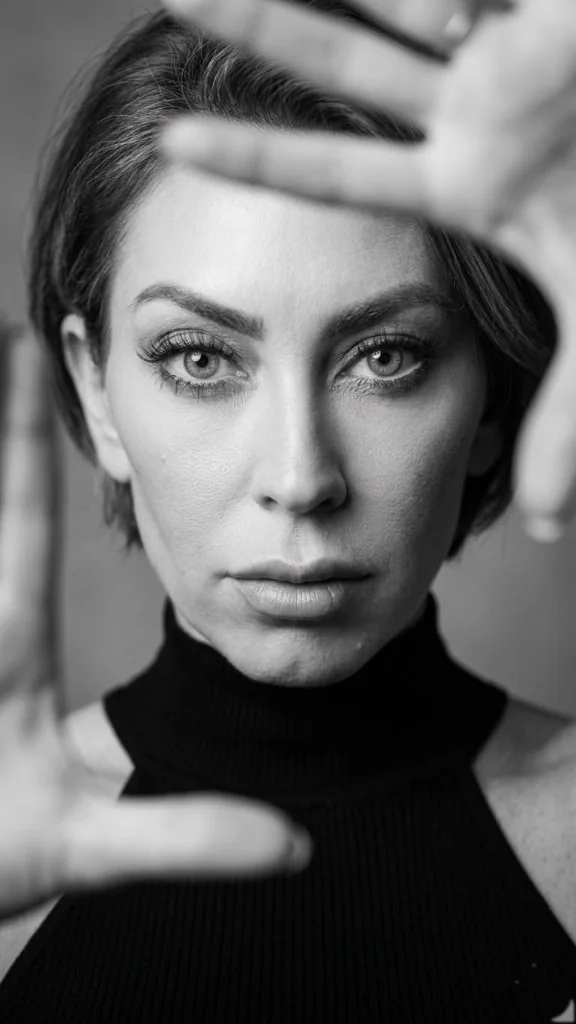
Massage therapist in Cannes, I have practised massage for around ten years, five of them professionally. Sports massage and lymphatic drainage are the foundation of my work: deep muscular work, with stretches and tools when useful, and a drainage I adapt to the person, slow and light or more rhythmic depending on what you are looking for. I receive clients in my private space in Cannes and I travel to homes, hotels and villas, from Cannes to Monaco and Saint-Tropez. Ashiatsu and my signature massage have their own site: michellediasprivat.com. Here I write what I tell my clients before a session: what each technique brings, what it does not do, and who it is not for, with the sources that trained me.
Continue to a session
The techniques described here are integrated into a session when they are relevant. They are not booked separately.