DrainageEnglish
Lymphatic drainage in Cannes: classic manual method or Brazilian method, how to choose
Both types of drainage exist in Cannes. They do not do the same thing: one is slow and discreet, the other firmer and more visible, for a while. Neither replaces a physiotherapist, and the "mirror effect" is not weight loss.
This article is informative and concerns a wellness practice. It does not replace medical advice, a diagnosis or treatment.
Your legs feel heavy in the evening, you feel swollen after a flight or before an event, you have seen spectacular before-and-after photos on Instagram, and you are looking for lymphatic drainage in Cannes without knowing whether to ask for the classic method, slow and gentle, or the Brazilian method, firmer and faster, which many salons in town now offer. Both exist, they do not do the same thing, they are not for the same people, and I practise both, adapting them to whoever is on the table. Here is what you need to decide.
Those salon photos are not mine, and I do not publish any. A spectacular before-and-after shows one moment. It does not tell you what comes back within forty-eight hours, nor what belongs to a physiotherapist.
What the lymphatic system does, in two paragraphs
Your body circulates blood and, alongside it, a clearer fluid, the lymph, which collects from the tissues the water, proteins and waste that the veins do not take back, then returns them to the circulation by passing through the lymph nodes. This network has no pump: it moves thanks to muscle contraction, breathing and the movements of the body. When you sit for eight hours, when you spend twelve hours on a plane, when it is thirty-five degrees in Cannes in August, this return slows down, and fluid builds up in the legs, the ankles, sometimes the belly or the face.
Manual lymphatic drainage is a technique that supports this return with the hands, following the direction of lymphatic flow, from the extremities towards the nodes. That is the principle shared by every school. What changes is the pressure, the rhythm, and the promise.
The classic method: Vodder, Leduc, and a story that begins on the Côte d’Azur
Manual lymphatic drainage as it is taught in Europe comes from Emil Vodder, a Danish doctor of philosophy who, in 1932, was working as a masseur on the Côte d’Azur with his wife Estrid and developed, on patients with chronic colds, a technique of very light circular movements, before presenting it in Paris in 1936. You can read this history on the Wikipedia page devoted to manual lymphatic drainage, and the ADLV, the association that teaches the original method in France, keeps the lineage going. The Belgian Albert Leduc later developed a more structured variant, widely present in physiotherapy training.
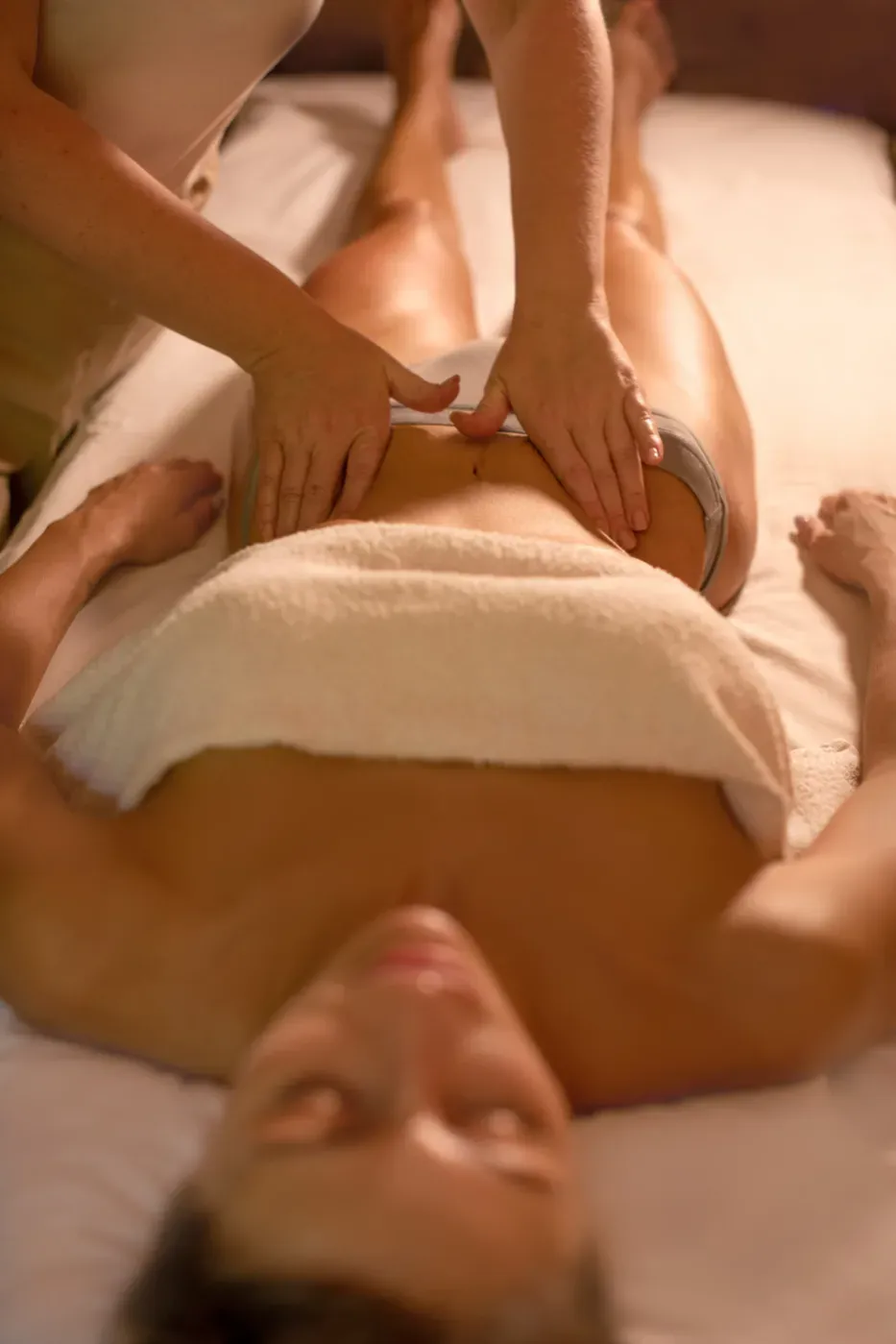
What you feel: almost nothing. The pressure is around thirty to forty grams per square centimetre, the skin is barely moved, the rhythm is slow, and the session feels more like a long, methodical caress than a massage. Many people fall asleep.
What the studies show: the most solid data concern lymphoedema, a chronic swelling linked to damage to the lymphatic system, particularly after breast cancer treatment. The Cochrane review on the subject, whose summary is public, concludes that manual drainage is safe and may add a benefit to compression bandaging, especially in mild to moderate forms, while stating that this benefit still needs to be confirmed by randomised data. On lipoedema, the French health insurance service, on ameli.fr, indicates that drainage can bring relief when there is a lymphatic component, without changing the course of the condition, and that there is no point continuing it if it does not help. And the same Wikipedia page, honestly, reminds us that the effectiveness of the technique has not been rigorously proven outside these settings, because comparative studies lack valid control groups.
What I take from this for you: the classic method is gentle, with no documented risk, suited to sensitive people, fragile skin, heavy legs without an underlying condition, travel fatigue, and anyone who wants to relax first. Its visible effect is modest and gradual. It does not “sculpt” anything.
The Brazilian method: firm pressure, fast rhythm, immediate result
For about ten years, another approach has taken hold in salons, in Cannes as everywhere in France: the one popularised by the Brazilian Renata França, and taken up under various names by practitioners trained in that school or in neighbouring ones. The lymphatic principle is the same, but the pressure is noticeably firmer, the rhythm much faster, the pumping movements are pressed in, and the session often ends with contouring work. The result is visible straight away: a flatter stomach, slimmer legs, a face that looks less puffy, and that is what the before-and-after photos show.
What you feel: a dynamic session, sometimes intense on the stomach and thighs, which can leave a sensation of heat and, on some skins, redness. You urinate more in the hours that follow.
What you should know: to my knowledge, no published clinical study has assessed this method specifically, nor its superiority over the classic method. Its visible result is real, but it rests on fluid being moved, and fluid that has been moved comes back. Without a change in habits, the effect fades in two to five days. That is perfect before an event, a shoot, a wedding, a return flight; it is an illusion if you expect it as weight loss or a treatment for cellulite. And the pressure, when it is poorly judged, can leave bruises on thin skin or on people taking anticoagulants.
What I take from this for you: the Brazilian method suits you if you want a quick visible effect, if you can take firm work, if you have no vascular fragility, and if you know the result is temporary. It does not suit you if you are looking for medical support, if you have reactive skin, or if you prefer a slow session.
How I choose, and why I do not choose for you
I work with both approaches, and I claim no brand. In a session of an hour and a half, I generally begin by opening the lymph node areas slowly, in the classic manner, then I adjust the pressure and rhythm to what your body accepts and to what you are looking for: slower and lighter if you have come for heavy legs or recovery after a flight, more rhythmic and firmer if you have an event in three days and want to see the difference. On the face, I always stay gentle. I ask you before we begin what you expect, and I tell you what you will get, with no promise beyond that.
I do not practise drainage for medical purposes. Drainage prescribed after surgery, after liposuction, for lymphoedema or during cancer treatment belongs to physiotherapists, as the AKTL recommendations and the legal framework confirmed by the Cour de cassation in 2021 make clear. If you are coming out of an operation, you need a prescription and a healthcare professional, and it is that professional who will tell you when wellness work can take over. This also means my sessions are not reimbursed by the French health insurance; only drainage prescribed and carried out by a physiotherapist is. The details of the drainage session in Cannes are on the service page.
So the word “drainage” on a booking form does not tell you everything. It tells you a direction of work. The pressure is decided at the table.
Contraindications
A thrombosis or phlebitis, even an old one, without medical advice. Heart or kidney failure. An ongoing infection, fever, acute inflammation. Cancer under treatment, without written agreement from the oncologist. Uncontrolled hyperthyroidism. Pregnancy in the first trimester, and afterwards with work limited to the legs. Diagnosed lymphoedema, which belongs to the physiotherapist. If you are not sure, ask your doctor first, and come with the answer.
And at home
I travel to Cannes, Le Cannet, Mougins, Antibes and the surrounding area, with my table. Drainage is one of the sessions that gains most from being done at your home, because the best thing you can do afterwards is stay lying down, legs slightly raised, and drink. Very few practitioners in the region travel for this session; the details are on the home massage page.
After a flight, a wedding or a day on your feet on the Croisette, this relay, table, silence, not getting straight back behind the wheel, often does more than the choice of a “school” on Instagram.
After a long-haul flight, the ankles and lower legs are usually the reason. After a day standing, it is more the heaviness of the evening. Before an event, it is the mirror. These three reasons do not call for the same pressure, nor for the same frequency. A single session may be enough before a departure. A more regular rhythm, if heavy legs come back every week, is discussed at the table, with no protocol sold in advance.
The decision remains yours. If you want gentleness and a gradual effect, ask for the classic method. If you want to see the difference in the mirror tonight, knowing it will not last, ask for the firm method. If you do not know, tell me, and we will start slowly.
Sources
- Manual lymphatic drainage for lymphoedema following breast cancer treatment — Cochrane · consulted on 2026-09-14 (opens in a new tab)
- Drainage lymphatique manuel — Wikipédia · consulted on 2026-09-14 (opens in a new tab)
- Association pour l'enseignement du drainage lymphatique selon la méthode originale du Dr Vodder — ADLV · consulted on 2026-09-14 (opens in a new tab)
- Lipœdème : traitement — ameli.fr · consulted on 2026-09-14 (opens in a new tab)
- Recommandations pour l'utilisation du drainage lymphatique manuel — AKTL, 2016 · consulted on 2026-09-14 (opens in a new tab)
- Cour de cassation : l'usage du terme massage n'est pas réservé aux kinés — FFMBE, 2021 · consulted on 2026-09-14 (opens in a new tab)
Frequently asked questions
What is the difference between Vodder drainage and the Brazilian method in Cannes?
The lymphatic principle is the same, from the extremities towards the nodes. The classic method (Vodder, Leduc) is very light, slow, almost a methodical caress. The method popularised by Renata França is firmer, faster, with contouring at the end of the session. The immediate visual effect is not the same, and it does not last.
Does lymphatic drainage make you lose weight?
No. A flatter stomach or slimmer legs just after a firm session come from fluid being moved. Without a change in habits, the effect fades in two to five days. It is not weight loss, nor a treatment for cellulite.
Is lymphatic drainage in Cannes reimbursed?
My wellness sessions are not reimbursed by the French health insurance. Only drainage prescribed and carried out by a physiotherapist, in a care setting, can be. After surgery, liposuction, lymphoedema or cancer, you need a prescription and a healthcare professional.
What are the contraindications for lymphatic drainage?
Thrombosis or phlebitis, even an old one, without medical advice; heart or kidney failure; infection or fever; cancer under treatment without written agreement from the oncologist; uncontrolled hyperthyroidism; first-trimester pregnancy; diagnosed lymphoedema. The list is not exhaustive: if in doubt, ask your doctor.
Can lymphatic drainage be done at home in Cannes?
Yes. I travel to Cannes, Le Cannet, Mougins, Antibes and the surrounding area, with the table. After the session, the best thing is usually to stay lying down, legs slightly raised, and drink, which is why it helps not to get back in the car straight away.
How long does the effect of a "Brazilian" drainage last?
The visible effect, when there is one, rests on fluid that has been moved. It generally fades in two to five days. It is useful before an event, a flight or a shoot. It is not a result you "lock in" from one session to the next without the support of daily habits.
Can you have drainage after an operation or cancer?
Not with me, not without the medical framework. Drainage prescribed after surgery, liposuction, lymphoedema or cancer belongs to physiotherapists, as the AKTL and the legal framework make clear. Wellness work can only take over if the healthcare professional allows it.
The author
Massage therapist in Cannes, I have practised massage for around ten years, five of them professionally. Sports massage and lymphatic drainage are the foundation of my work: deep muscular work, with stretches and tools when useful, and a drainage I adapt to the person, slow and light or more rhythmic depending on what you are looking for. I receive clients in my private space in Cannes and I travel to homes, hotels and villas, from Cannes to Monaco and Saint-Tropez. Ashiatsu and my signature massage have their own site: michellediasprivat.com. Here I write what I tell my clients before a session: what each technique brings, what it does not do, and who it is not for, with the sources that trained me.
Continue to a session
The techniques described here are integrated into a session when they are relevant. They are not booked separately.